

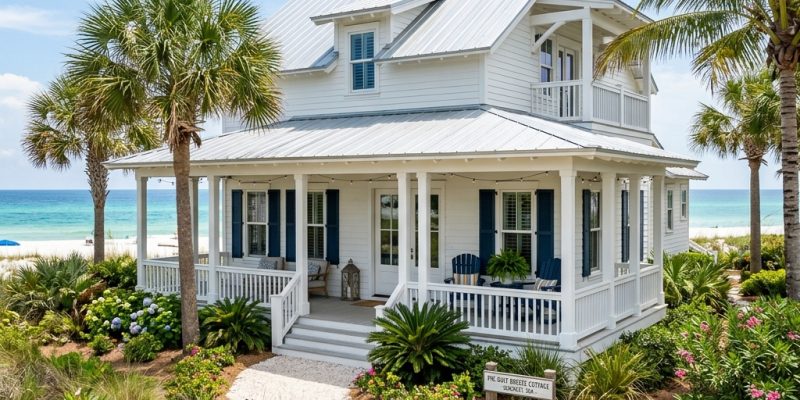
St. Joe’s ongoing 2026 build-out of WaterSound Origins and WaterSound Town Center is adding residential phases, retail, and lifestyle amenities that directly affect long-term value, commute convenience, and rental strategy for east 30A buyers, making the expansion timeline as important as the location itself.
How is St. Joe’s 2026 expansion changing the case for buying in WaterSound Origins?
St. Joe’s continued build-out of WaterSound Origins and WaterSound Town Center in 2026 is reshaping how buyers evaluate the east end of 30A. New residential phases, incoming retail, and expanding lifestyle amenities are shifting the value equation away from beach proximity alone, and toward master-planned livability that makes WaterSound Origins increasingly competitive for both primary residents and long-term investors.
What the WaterSound Origins and Town Center Build-Out Actually Means for Buyers
WaterSound Origins sits in Inlet Beach on the eastern end of Walton County, and its story in 2026 is still being written. The St. Joe Company has been methodically expanding the community through new residential phases while simultaneously developing WaterSound Town Center as the commercial and lifestyle spine of the area. That combination is what makes the east end of 30A a genuinely different conversation than it was five years ago.
The value proposition here has never been purely about beach access. WaterSound Origins is positioned off the beach, not a gulf-front community, which is a real distinction buyers need to understand upfront. What it offers instead is a master-planned environment: walkable neighborhoods, a community pool and fitness complex, parks, a kayak launch on Lake Powell, and a growing town center that is adding retail, dining, and services within a short drive or bike ride.
For buyers weighing this against gulf-front communities like Alys Beach or Rosemary Beach, the honest comparison is this: you are trading direct beach access for more square footage, lower entry price, and the kind of everyday-livability infrastructure that a master-planned community can deliver. Recent Zillow market data for the Alys Beach area shows a median sale price of $7,500,000 with a median of 50 days on market, a benchmark that illustrates just how premium the gulf-front tier is. WaterSound Origins offers a meaningfully different price point for buyers who want east-end 30A without that premium.
The expansion timeline matters here as much as the current snapshot. When St. Joe’s quarterly results reflect continued investment in both residential phases and the Town Center commercial build-out, that signals sustained developer commitment, which is a meaningful underwrite of long-term value. Communities where the developer walks away mid-build are a different risk profile than one where the parent company is publicly traded and actively reporting on progress.
WaterSound Town Center: The Amenity Layer That Changes the Math
For buyers considering WaterSound Origins as a primary residence or a part-time base, WaterSound Town Center is the piece that tips the scales. The Town Center is designed to bring everyday retail, medical services, restaurants, and fitness options to the east end of 30A, reducing the dependence on driving into Destin or Panama City Beach for basic needs.
That matters practically. The east end of 30A has historically been underserved for daily errands. US-98 is accessible, but anyone who has tried to navigate the 30A corridor during peak season knows that a 3-mile trip can take 30 minutes. Town Center amenities within the WaterSound footprint change the commute calculus for full-time and part-time residents alike.
I walk buyers through this distinction regularly: a community’s long-term value isn’t just about what exists today, it’s about the trajectory. When the Town Center reaches a critical mass of tenants and services, WaterSound Origins becomes a more self-contained lifestyle choice. That’s the bet buyers are making when they purchase in an active phase of a master-planned community. The upside is real; so is the execution risk. Your job as a buyer is to understand where the development actually stands, not where the marketing says it’s headed.
Commute, Access, and the Practical Reality of East 30A Living
Location on the east end of 30A means different things depending on how you plan to use the property. Here’s how WaterSound Origins compares against its closest east-end neighbors on the practical access questions I hear most from buyers:
| Community | Gulf Front Access | US-98 Proximity | Town Center / Retail Access | Primary Residence Suitability |
|---|---|---|---|---|
| WaterSound Origins | No (deeded beach access) | Very close | Adjacent (WaterSound Town Center) | High, master-planned infrastructure |
| WaterSound Beach | Yes (gulf front) | Close | Close to Town Center | Moderate, more vacation-oriented |
| Rosemary Beach | Yes (gulf front) | Moderate | Rosemary Beach Town Center (walkable) | High, walkable village design |
| Alys Beach | Yes (gulf front) | Moderate | Alys Beach town square (limited) | Moderate, premium vacation/second home |
| Seacrest / Inlet Beach | Varies by parcel | Very close | Close to Town Center | Moderate, mixed use area |
The east end of 30A, Inlet Beach, Seacrest, WaterSound, Rosemary Beach, sits closer to US-98 than the central 30A communities like Seaside or WaterColor. That’s an advantage for regional travel and for buyers who commute to Panama City or Destin regularly. It can feel like a disadvantage during summer when the US-98 / 30A intersection at Inlet Beach backs up. Knowing the specific access points for any property you’re considering is something I always map out with buyers before we get serious about an offer.
Rental Potential: What You Need to Verify Before You Buy
This is the question I get most often from buyers who are weighing WaterSound Origins as an investment or a property that pays for itself part of the year. The honest answer is: it depends on the specific parcel, and you need to verify it before you close.
WaterSound Origins has its own governing documents and HOA rules that can affect short-term rental strategy. Walton County Planning and Development Services administers land-use and development review for the east end of 30A, and county-level rules interact with neighborhood governing documents in ways that can limit or constrain short-term rental operations. Minimum stay requirements, HOA-managed booking rules, and architectural controls can all affect whether a property functions the way you’re modeling it.
This is not a reason to avoid WaterSound Origins, it’s a reason to do the diligence correctly. Some phases and product types within Origins have more flexibility than others. I pull the governing documents and walk buyers through the rental rules as part of the evaluation process, because a property that looks like a strong vacation rental on paper can look very different once you understand the operational constraints.
According to National Association of Realtors research, second-home and investment buyers consistently rank community amenities and rental income potential as their top two decision factors, which is exactly the tension WaterSound Origins presents. The amenities are strong and getting stronger. The rental picture requires verification. Both are true at the same time.
Long-Term Value: The Case For and Against Buying in an Active Build-Out
Buying in a community that is still being built out is a calculated bet. Here’s how I frame it for buyers who ask me directly whether WaterSound Origins makes sense as a long-term hold.
The case for it: Master-planned communities with a committed developer tend to appreciate as the amenity layer completes. Early buyers in phases of communities like this have historically benefited from the “rising tide” effect as retail, services, and infrastructure come online. The St. Joe Company’s continued investment in WaterSound Town Center is a signal that the build-out is progressing, not stalling.
The case for caution: Amenity completion timelines slip. Retail tenants change. The community you’re buying into today may look different from the community that was marketed to you. And on the east end of 30A specifically, you are competing for resale buyers against gulf-front communities that have an inherent scarcity advantage. Beach proximity still commands a premium, owning on the Emerald Coast carries long-term appreciation logic, but the gulf-front tier has historically outperformed inland communities on a per-square-foot basis.
The buyers who do best in WaterSound Origins are the ones who are buying it for what it actually is, a well-amenitized, master-planned community on the east end of 30A with a growing town center, rather than what they wish it were. If your primary motivation is beach proximity, there are better fits. If your motivation is livability, value relative to gulf-front pricing, and a long-term hold in a community with developer-backed infrastructure, WaterSound Origins deserves serious consideration.
According to Florida Realtors market research, the northwest Florida coastal corridor has seen sustained buyer interest from out-of-state buyers relocating full-time, a trend that benefits communities with primary-residence infrastructure over pure vacation destinations. WaterSound Origins is well-positioned for that buyer profile.
Every situation is different, and the only way to know whether WaterSound Origins fits your specific goals, rental income, primary residence, long-term hold, or some combination, is to run the numbers with someone who knows this market and has walked the community. That’s exactly the kind of evaluation I do with buyers before we ever write an offer.
Frequently Asked Questions
Is WaterSound Origins still being built out in 2026?
Yes. WaterSound Origins is an active master-planned community with residential phases continuing to come online in 2026. St. Joe Company, the developer, has been releasing new phases while simultaneously expanding WaterSound Town Center with retail and lifestyle amenities. Buyers should ask specifically which phase they’re purchasing in and what amenities are already complete versus still planned.
What new retail is coming to WaterSound Town Center?
WaterSound Town Center is designed to bring retail, dining, fitness, and medical services to the east end of 30A, reducing residents’ dependence on Destin or Panama City Beach for daily needs. The specific tenant mix and opening timeline evolves as the build-out progresses. For the most current status on what’s open and what’s announced, I recommend checking St. Joe’s investor relations page directly or asking me, I track this as part of advising buyers in the area.
Does WaterSound Town Center make WaterSound Origins better for full-time living?
Meaningfully, yes. The east end of 30A has historically lacked the everyday retail and services that make full-time living practical without a long drive. As WaterSound Town Center adds tenants, it reduces that friction significantly. For buyers considering WaterSound Origins as a primary or part-time residence rather than a pure vacation rental, the Town Center build-out is one of the strongest arguments for the community’s long-term livability.
Are rental rules in WaterSound Origins different from other 30A neighborhoods?
Yes, and this is critical diligence before you buy. WaterSound Origins has its own HOA governing documents that can include minimum stay requirements, architectural controls, and operational rules that affect short-term rental strategy. Walton County land-use rules add another layer. Some phases within Origins have more rental flexibility than others. Always pull the governing documents and verify the rental rules for the specific parcel you’re considering before you close.
Does new development at WaterSound Town Center help resale value on the east end of 30A?
Generally, yes, amenity completion in a master-planned community tends to support and lift surrounding property values as the lifestyle offering becomes more tangible to future buyers. That said, resale value on the east end of 30A is also shaped by gulf proximity, product type, condition, and the overall market. The Town Center build-out is a positive long-term signal, not a guarantee. Your specific resale outcome will depend on what you buy, what you pay, and when you sell.
Is WaterSound Origins a good choice if I want both lifestyle amenities and investment potential?
It can be, but the two goals require different diligence. The lifestyle amenities case is strong and getting stronger as WaterSound Town Center matures. The investment case depends heavily on whether the specific property allows short-term rentals, what the rental demand and rate history looks like for that product type, and how the entry price compares to comparable inventory. I walk buyers through both sides of that equation before we make any decisions.
The Bottom Line on East 30A’s Most Interesting Master-Planned Bet
WaterSound Origins in 2026 is a community in motion, and that’s both its opportunity and its complexity. St. Joe’s continued investment in residential phases and WaterSound Town Center is building a genuine lifestyle case for the east end of 30A that goes well beyond beach proximity. For the right buyer, it’s one of the most compelling long-term value propositions on the corridor.
Getting it right means understanding exactly what phase you’re buying in, what the rental rules actually allow, and how the amenity timeline maps to your holding period. That’s the kind of on-the-ground evaluation I do with every buyer I work with in this area.
If you’re weighing WaterSound Origins against other east-end communities, or trying to figure out whether the expansion timeline works for your goals, schedule a conversation with me and we’ll map it out together.
About Debbie James
Debbie James is a REALTOR® with Scenic Sotheby’s International Realty who specializes in luxury beach homes along Scenic Highway 30A on Florida’s Emerald Coast. With more than two decades of experience selling, financing, and investing in homes, she has consistently ranked in the top 1% of agents from Destin to Panama City Beach.
Scenic Sotheby’s International Realty · (850) 450-2000
Equal Housing Opportunity. Debbie James is a licensed real estate professional regulated by the Florida Real Estate Commission (FREC). This article is general information only and does not constitute legal, tax, or financial advice. Rental rules, HOA restrictions, and development timelines change, confirm all details for your specific property with your attorney, tax advisor, lender, or closing officer before making any purchase decision.