

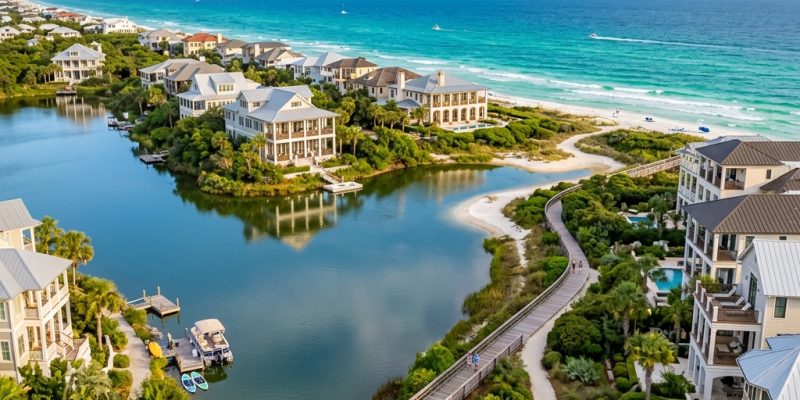
Can you turn a 30A vacation home into a profitable rental investment?
Yes, and many of my best clients have done exactly that. The key is treating the purchase like a business decision from day one: verifying that the property is eligible for short-term rentals, understanding the local tax and insurance picture, and underwriting realistic occupancy numbers before you fall in love with the view. Get those steps right and 30A can be one of the most rewarding rental markets on the Gulf Coast.
I’ve watched this happen dozens of times. A family spends a week in WaterColor or Rosemary Beach, falls completely in love with the lifestyle, and starts doing the math on owning instead of renting. That instinct is sound. The Emerald Coast draws consistent vacation demand, and many of those visitors become repeat renters who book the same home year after year. But the path from “I love it here” to “this property cash-flows” has a few critical checkpoints that most out-of-state buyers don’t know to look for.
What every 30A rental investor needs to understand first
30A is a corridor, not a single town
This is the first thing I tell every buyer who comes to me with a rental investment goal. Scenic Highway 30A runs 24 miles through Walton County, passing through communities as different as Dune Allen, Blue Mountain Beach, Seagrove, WaterColor, Seaside, Seacrest, Alys Beach, and Rosemary Beach. Each of those communities has its own character, its own price point, and critically, its own rules about short-term rentals.
There is no single 30A rental permit. Walton County sets the baseline zoning and licensing framework, but HOA covenants and deed restrictions within individual communities can be stricter than county rules. Some communities require a minimum rental period of seven nights. Others have owner-occupancy requirements, parking limits, or architectural controls that affect how you operate the property. You need to verify all of this before you make an offer, not after.
Short-term rental eligibility is the first underwriting question
Before any income projection matters, the property has to actually be eligible for short-term rentals. I walk every investment-focused buyer through a checklist that includes:
- County zoning confirmation that the parcel is in a zone that permits vacation rentals
- HOA document review covering rental minimums, owner-occupancy caps, parking rules, and any rental moratoriums or caps on the number of rental days per year
- Deed restrictions that may be separate from the HOA and harder to find
- Local licensing requirements under Walton County’s vacation rental ordinance
According to the Florida Department of Business and Professional Regulation, short-term rental regulation in Florida is shaped primarily by local zoning and licensing rather than a single statewide permit system. That means the rules genuinely vary by community, and a property two streets over from a rental-friendly neighborhood could be subject to completely different restrictions.
Florida taxes apply to short-term rental income
This surprises a lot of first-time Florida rental investors. The Florida Department of Revenue requires that short-term rentals (stays of six months or less) collect and remit state sales tax. Walton County also levies a tourist development tax on short-term stays. The exact rates depend on the length of stay and the applicable county rules, and they are your obligation as the property owner to collect and remit properly.
I’m not a tax advisor, and I’d encourage you to confirm your specific obligations with a Florida CPA or tax attorney before you close. But knowing these costs exist is part of underwriting the investment correctly from the start.
The local market picture and what it means for investors
The 30A market has remained one of the most sought-after coastal corridors in the Southeast, and the numbers reflect that. In Alys Beach specifically, recent Zillow market data shows a median sale price of $7,500,000, with homes spending a median of 48 days on market. There are currently 33 active listings, with 7 new listings added in the past 30 days and 23 homes sold in the trailing 90-day period. You can explore more about what drives value in this community on the Alys Beach brokerage sales breakdown I put together.
Alys Beach represents the ultra-luxury end of the corridor. Other communities along 30A offer lower entry points with strong rental track records of their own. The right community for your investment depends on your budget, your target renter profile, and your tolerance for HOA restrictions.
| 30A Community | Typical Rental Profile | STR Eligibility Notes |
|---|---|---|
| Alys Beach | Ultra-luxury, weekly rentals, high nightly rates | HOA rules apply; verify deed restrictions |
| Rosemary Beach | Luxury, high demand, strong repeat-renter base | Community rental program available; HOA review required |
| WaterColor | Family-oriented, managed rental program, consistent occupancy | Rental program through community; HOA governs minimums |
| Seagrove Beach | Mid-range, strong weekly rental history, fewer HOA restrictions | Walton County zoning governs; fewer deed restrictions in older areas |
| Blue Mountain Beach | Quieter, lower price points, loyal repeat renters | County zoning applies; check individual parcel restrictions |
| Inlet Beach / Seacrest | Growing demand, newer inventory, proximity to Alys Beach | Varies by subdivision; HOA review essential |
One thing I always tell buyers who are serious about rental income: seasonality is real. Walton County tourism peaks in spring and summer, and any honest income projection has to account for shoulder-season and off-season occupancy rates, not just peak weeks. The best investors I work with underwrite conservatively and are pleasantly surprised. The ones who get into trouble project peak rates year-round.
Insurance and flood exposure are not optional diligence items
Coastal properties in northwest Florida face hurricane and flood risk that can materially affect both your operating costs and your ability to finance the purchase. FEMA flood maps determine whether your lender will require flood insurance, and many parcels along 30A sit in Special Flood Hazard Areas where that coverage is mandatory. Even outside those zones, smart investors carry flood coverage.
Windstorm insurance is a separate underwriting consideration. NOAA data confirms that northwest Florida sits in an active hurricane corridor, and windstorm premiums for coastal properties reflect that exposure. Before you finalize your investment analysis, get actual insurance quotes, not estimates, so you know what your carrying costs look like. A property that pencils at one insurance rate can look very different at the real market rate.
Hurricane-hardening features, impact windows, reinforced roofing, and elevation above base flood level all affect both insurability and premium pricing. These are worth asking about specifically during due diligence.
How to structure your 30A rental investment purchase
Here’s the workflow I walk my investment-focused buyers through, in order:
- Define your investment goals first. Are you optimizing for rental income, appreciation, or personal use with some rental offset? The answer changes which communities and which property types make the most sense.
- Verify short-term rental eligibility on any specific property before you spend time underwriting it. County zoning, HOA documents, and deed restrictions all need to be reviewed.
- Check the FEMA flood map for the parcel and get preliminary insurance quotes, including windstorm, before you go under contract.
- Confirm your Florida tax obligations with a CPA who handles short-term rental properties. State sales tax and county tourist development tax are real costs that belong in your pro forma.
- Underwrite occupancy conservatively using actual comparable rental data for that community and property type, not peak-season projections.
- Run your financing structure. Second-home and investment-property loan requirements differ, and lenders treat short-term rental income differently depending on the loan type. The CFPB’s homebuying resources are a good starting point for understanding how lenders evaluate investment properties.
Every situation is different, and the only way to know whether a specific property makes sense as a rental investment is to run the real numbers with someone who knows this market. That’s exactly where I come in.
If you’ve been wondering whether owning on 30A could actually make financial sense, the post I wrote on why you can’t afford not to own a beach home covers the broader case for coastal ownership and might be worth reading alongside this one.
Frequently Asked Questions
What are the best neighborhoods on 30A for vacation rental income?
It depends on your budget and rental strategy. Rosemary Beach and Alys Beach command the highest nightly rates and attract luxury renters, but they also carry the highest entry prices and stricter HOA oversight. WaterColor has a well-established community rental program with consistent occupancy. Seagrove Beach and Blue Mountain Beach offer lower price points with fewer deed restrictions and a loyal base of repeat renters. The right neighborhood depends on your specific investment goals, and I’d walk you through the tradeoffs for each.
How do 30A vacation rental rules work in Walton County?
Walton County sets the baseline zoning and licensing framework for short-term rentals along 30A, but individual beach communities and HOAs can layer stricter rules on top of that. Minimum rental periods, owner-occupancy requirements, and parking restrictions vary by community and sometimes by subdivision within a community. You need to review county zoning, HOA documents, and deed restrictions for any specific property before assuming it’s rental-eligible.
What taxes apply to short-term rentals in Florida on 30A?
Florida requires short-term rental operators to collect and remit state sales tax on stays of six months or less, per the Florida Department of Revenue. Walton County also levies a tourist development tax on short-term stays. The exact rates and filing requirements depend on your situation, and I’d strongly recommend working with a Florida CPA before you close on a rental property.
What kind of insurance do I need for a 30A investment property?
At minimum, you’ll need a landlord or short-term rental policy, windstorm coverage, and flood insurance if the property is in a FEMA-designated Special Flood Hazard Area (and often even if it isn’t). Windstorm and flood are typically separate policies from your standard homeowners coverage and can be significant cost items on coastal properties. Get real quotes during due diligence, not after closing, so you can underwrite accurately.
How do flood zones affect buying a rental home on the Emerald Coast?
Many parcels along 30A fall within FEMA Special Flood Hazard Areas, which means lenders will require flood insurance as a condition of financing. Even outside those zones, flood coverage is a smart carry for coastal properties. The flood zone designation also affects how you finance the home and what it costs to insure it. Check the FEMA Flood Map Service Center for any specific address early in your due diligence, before you’re under contract.
Is 30A better for Airbnb or traditional weekly rentals?
Most 30A communities operate on a weekly rental cadence, particularly in summer, and many HOAs set a seven-night minimum stay that makes nightly Airbnb-style bookings impossible. Traditional weekly rentals managed through a local property management company are the dominant model in most 30A communities. The specific minimum stay for any property is set by HOA covenants and local zoning, so always verify before you assume a nightly rental strategy is available.
The 30A rental investment opportunity is real, but it rewards buyers who do their homework before they fall in love with a property. If you’re ready to take that next step from vacation visitor to property owner, I’d love to walk you through what the process looks like for your specific goals and budget.
Ready to explore 30A rental investment properties? Schedule a consultation with Debbie James and get a personalized look at which communities and property types fit your investment strategy.
About Debbie James
Debbie James is a REALTOR® with Scenic Sotheby’s International Realty who specializes in luxury beach homes along Scenic Highway 30A on Florida’s Emerald Coast. With more than two decades of experience selling, financing, and investing in homes, she has consistently ranked in the top 1% of agents from Destin to Panama City Beach.
Scenic Sotheby’s International Realty · (850) 450-2000
Equal Housing Opportunity. Debbie James is licensed by the Florida Real Estate Commission. This article is provided for general informational purposes only and does not constitute legal, tax, or financial advice. Readers should confirm their specific costs, tax obligations, insurance requirements, and rental regulations with a qualified Florida attorney, CPA, lender, or closing officer before making any investment decision.